Johann Gregorius Höroldt (1696–1775), born in Jena, came to Meissen from Vienna in April 1720, together with Samuel Stötzel (1685–1735), a former employee of the famous porcelain inventor Johann Friedrich Böttger.
Here, Höroldt not only developed a wide range of overglaze colors, but he also possessed the ability to transform them into captivating decorations. The Meissen decorative style of today, in all its diversity and splendor, can be traced back to him. He is considered the father of European porcelain painting.


china style on a golden pedestal

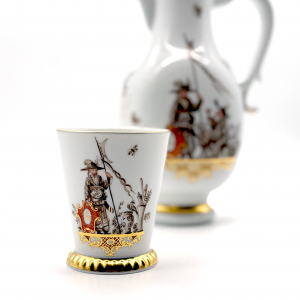
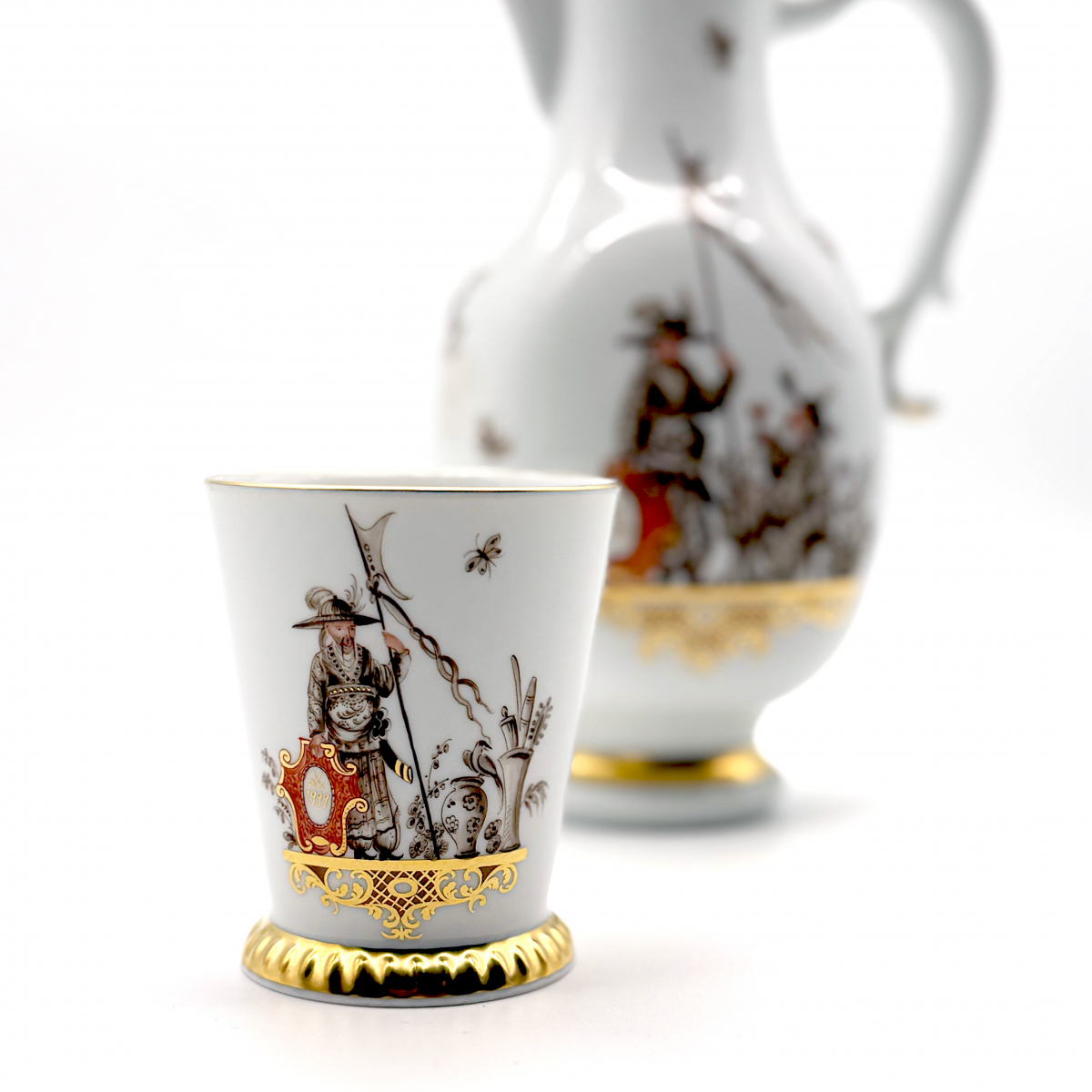
In 1999, the landscape and figure painters of the Meissen manufactory presented an impressive example of chinoiserie painting in the style of Höroldt. A wine jug and a beaker were imaginatively decorated with sepia-toned figures placed on golden pedestals. The painters found some of their inspiration in a number of the 125 surviving sheets of the so-called Schulz Codex, a collection of drawings depicting the everyday life of the Chinese during Höroldt’s time. These had been rendered in the original by Höroldt and his assistants using sepia-colored thorn ink on yellowish-brown laid paper. The collection received its name from a collector who assembled it. The depictions derive considerable charm from the fact that they were created from the perspective of 18th-century Central Europeans who had never visited China.
© Christina Willkomm